
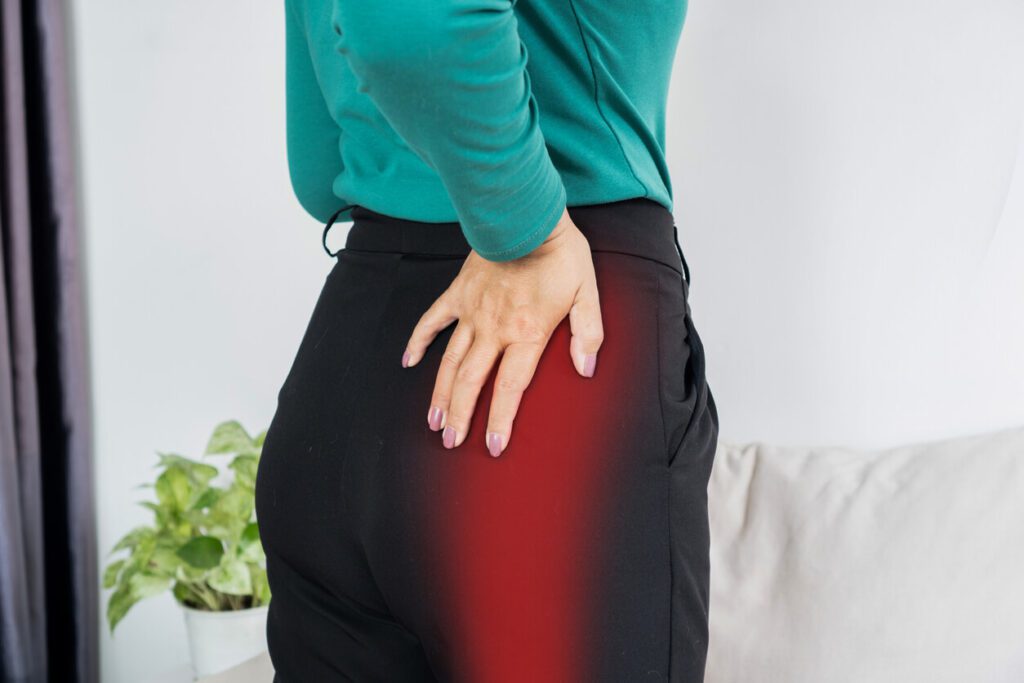
While there isn’t a guaranteed permanent cure for hip bursitis, effective management strategies can significantly reduce symptoms and prevent flare-ups. In short,
- Hip bursitis can often be managed long-term through physical therapy, lifestyle adjustments, and proper treatment.
- Advanced cases may require medical interventions such as corticosteroid injections or surgery, though these are not always permanent fixes.
- Preventative measures, such as maintaining a healthy weight and avoiding repetitive strain, are crucial to reducing the risk of recurrence.
Dealing with persistent hip pain can make simple activities like walking, climbing stairs, or even sleeping feel like an impossible challenge. If you are experiencing sharp or aching pain on the outer side of your hip, you might be dealing with hip bursitis.
Many patients come to us asking one primary question: Is there a permanent cure for this condition? While the medical field often focuses on long-term management and resolution rather than a magic “cure,” achieving complete and lasting relief from hip bursitis is highly possible.
Understanding Hip Bursitis
To understand how to treat hip bursitis, you first need to understand the anatomy of the hip joint. Hip bursitis, clinically known as trochanteric bursitis, is the inflammation of a bursa. A bursa is a small, jelly-like, fluid-filled sac. These sacs are located throughout the body, strategically placed to cushion bones, tendons, and muscles.
The most prominent bursa in the hip sits over the greater trochanter, which is the bony point on the outer side of your hip bone. When this bursa becomes irritated and inflamed, it swells and causes localized pain.
This discomfort often radiates down the outside of the thigh, making movement and pressure highly uncomfortable.
Types and Prevalence of Hip Bursitis
Trochanteric bursitis is the most common type of hip bursitis, affecting the outer portion of the hip. Another variation is iliopsoas bursitis, which involves a bursa located on the inside of the hip and typically causes groin pain.
Hip bursitis is a common ailment, especially among women and older adults. According to NIH research, it affects an estimated 1.8 to 5.6 per 1,000 adults each year. Because the condition can significantly impact mobility and quality of life, seeking timely professional care is crucial for a smooth recovery.
Causes and Risk Factors for Hip Bursitis
Hip bursitis rarely happens without a specific trigger. According to the Cleveland Clinic, anything that irritates or damages the bursa can cause inflammation, but it most often results from excessive friction or stress placed on the bursa over time.
Common causes include:
- Repetitive Stress: Activities that require repetitive hip movements, such as running, cycling, or climbing stairs, can overwork the hip joint. Prolonged standing can also irritate the bursa.
- Direct Injury: A sudden impact, like falling onto your hip or bumping into a hard surface, can instantly inflame the bursa.
- Biomechanical Issues: Spine problems like scoliosis or lumbar arthritis can alter the way you walk. This uneven gait places unnatural stress on the hip joint and the surrounding bursae.
Key Risk Factors
Certain populations are more susceptible to developing hip bursitis. Risk factors include:
- Age and Sex: The condition is most common in middle-aged and elderly individuals. Women are also more prone to it due to a wider pelvic anatomy, which increases the angle and friction of tendons moving over the hip bone.
- Underlying Conditions: Inflammatory conditions like rheumatoid arthritis or gout can increase the likelihood of bursal inflammation.
- Bone Spurs: Calcium deposits or bone spurs that form near the greater trochanter can physically rub against the bursa, causing continuous irritation.
- Previous Hip Surgery: Scar tissue or altered biomechanics from past hip surgeries can increase friction around the joint.
Recognizing the Signs and Symptoms of Hip Bursitis
Identifying the symptoms early allows for faster intervention and better outcomes. The primary symptom of hip bursitis is localized pain on the outer hip, directly over the greater trochanter.
Initially, this pain may feel sharp and intense. Over time, it often transitions into a dull, widespread ache that spreads across a larger area of the hip and thigh. The affected area is usually tender to the touch, making it incredibly uncomfortable to lie on your side in bed.
When Symptoms are Most Noticeable
Patients frequently report that their pain intensifies at night, severely disrupting their sleep patterns. You may also notice increased stiffness and pain after periods of inactivity, such as sitting in a chair for a long time or waking up in the morning. Repetitive hip movements, like squatting, hiking, or getting in and out of a car, consistently exacerbate the symptoms.
Diagnosing Hip Bursitis
Accurate diagnosis is the foundation of an effective treatment plan. When you visit a healthcare provider, they will begin with a detailed medical history and a physical examination.
Your doctor will palpate the outer hip to check for tenderness over the greater trochanter. They will also guide your leg through various ranges of motion to identify specific movements that trigger your pain.
This physical assessment helps differentiate hip bursitis from other issues like hip osteoarthritis or tendonitis.
Imaging and Diagnostic Tests
While physical exams are often sufficient, diagnostic imaging can confirm the diagnosis and rule out other structural problems.
- X-rays: These help rule out bone fractures, bone spurs, or advanced arthritis.
- MRI (Magnetic Resonance Imaging): MRIs provide highly detailed images of soft tissues, clearly showing an inflamed bursa and highlighting any potential tendon tears.
- Ultrasound: This tool allows doctors to visualize the bursa in real-time and is often used to precisely guide therapeutic injections.
- Diagnostic Injections: A doctor may inject a localized anesthetic directly into the bursa. If this provides immediate, temporary pain relief, it strongly confirms that the bursa is the source of the pain.
Treatment Options for Hip Bursitis
The journey to healing hip bursitis typically begins with conservative, non-surgical approaches. The immediate goal is to reduce pain and inflammation so you can comfortably begin physical rehabilitation.
Non-Surgical and Conservative Approaches
Initial treatment focuses on protecting the joint and allowing the inflammation to subside naturally.
- Rest and Modification: Avoid activities that trigger your pain. If running hurts, switch to a low-impact activity like swimming until the inflammation decreases.
- Ice Therapy: Applying ice packs to the outer hip for 15 to 20 minutes several times a day constricts blood vessels and rapidly reduces swelling.
- Medication: Over-the-counter nonsteroidal anti-inflammatory drugs (NSAIDs) like ibuprofen or naproxen are excellent for managing acute pain and inflammation.
- Physical Therapy: This is arguably the most critical component of long-term recovery. A physical therapist will teach you targeted stretches and strengthening exercises. Improving the strength of your hip abductors, core, and gluteal muscles relieves the mechanical stress placed on the bursa.
Alternative Therapies
Many patients find relief by incorporating alternative therapies into their comprehensive care plan.
- Massage Therapy: Deep tissue massage can relieve tension in the muscles and fascia surrounding the hip, reducing overall friction on the joint.
- Acupuncture: This traditional practice can help stimulate the nervous system and promote natural pain relief and healing blood flow to the affected area.
Advanced Treatment Options
If conservative methods do not provide sufficient relief after several weeks, your doctor may recommend more advanced interventions.
- Corticosteroid Injections: Injecting a powerful anti-inflammatory medication directly into the bursa provides significant, rapid pain relief. While the results are sometimes temporary, they often reduce pain enough to allow patients to participate fully in physical therapy.
- Platelet-Rich Plasma (PRP) Therapy: This regenerative medicine technique uses your body’s own growth factors to promote cellular healing and reduce chronic inflammation.
- Extracorporeal Shockwave Therapy (ESWT): This non-invasive treatment uses targeted sound waves to stimulate blood flow and metabolic activity, encouraging the body to heal persistent bursitis.
- Surgery (Bursectomy): Surgical removal of the bursa is incredibly rare. It is considered strictly as a last resort for severe, chronic cases that completely fail to respond to all other treatments.
Can Hip Bursitis Be Permanently Cured?
Returning to the primary question: Is there a permanent cure for hip bursitis?
In the medical community, we often refer to “complete resolution” rather than a cure. The good news is that the vast majority of patients who adhere to a comprehensive treatment plan achieve full resolution of their symptoms. According to the Cleveland Clinic, trochanteric bursitis usually improves within a few weeks to a few months with rest and treatment. The inflammation disappears, and the pain stops entirely.
However, the bursa remains a part of your anatomy. If you return to the exact same biomechanical habits, repetitive stress, or poor footwear that caused the issue initially, the bursitis can return.
Therefore, a “permanent cure” relies heavily on your commitment to long-term lifestyle changes, maintaining muscle strength, and correcting the root causes of the joint friction.
Prevention and Lifestyle Adjustments for Hip Bursitis
Preventing the recurrence of hip bursitis involves making smart, sustainable choices that reduce stress on your hip joints.
- First, maintain a healthy body weight. Excess weight translates directly into extra mechanical load on your hips, knees, and ankles.
- Wear supportive shoes that accommodate your specific arch type, and consider custom orthotics if you have flat feet or a leg-length discrepancy.
- When exercising, always include proper warm-up and cool-down routines. Gradually increase the intensity and duration of your workouts rather than pushing your body too hard too fast.
Long-Term Solutions
Make regular stretching and strengthening a permanent part of your weekly routine. Strong gluteal muscles and a stable core keep your pelvis aligned, preventing the tendons from snapping tightly over the hip bone.
Make ergonomic adjustments at your workplace, especially if you sit or stand for prolonged periods. Take frequent breaks to walk around and stretch. By addressing underlying conditions and maintaining good joint mechanics, you can keep hip bursitis away for good.
Get Professional Care for Hip Bursitis in Naples, FL
Do not let chronic joint pain dictate your life. You should consult a healthcare provider if your hip pain persists despite resting, icing, and using over-the-counter pain relievers for a few days. Seek immediate medical care if the pain is severe, suddenly worsens, or completely prevents you from bearing weight on your leg.
Additionally, if you notice a fever, intense redness, or sudden swelling around the hip, these could be signs of a localized infection requiring urgent medical attention.
Early diagnosis and proactive management are the keys to preventing chronic pain and improving your overall quality of life. Our experienced medical team at the Joint Replacement Institute is dedicated to providing comprehensive, personalized care for all types of hip conditions. We utilize state-of-the-art diagnostics and a multidisciplinary approach to get you back on your feet comfortably.
Call us today at (239) 261-2663 or use our online appointment request form to schedule your thorough evaluation today.
Frequently Asked Questions (FAQs)
How long does it take for hip bursitis to heal completely?
Recovery times vary depending on the severity of the inflammation. Mild cases may resolve in a few weeks with rest and ice. Chronic cases may take several months of physical therapy and advanced treatments to heal fully.
Is walking good for hip bursitis?
While walking is generally a healthy activity, it can aggravate an actively inflamed bursa. It is best to rest the hip during acute pain flare-ups. Once the initial inflammation decreases, a physical therapist can help you safely resume walking.
Can a chiropractor help with hip bursitis?
Yes, chiropractic care can be a valuable part of your recovery. A chiropractor can assess your spinal alignment and pelvic mechanics. Correcting imbalances in your gait can significantly reduce the unnatural friction placed on your hip bursa.
